Oct/2022 - active
Cristiano Pavini, Marina Iemini Atoji, Nathália Mendes, Raul Durlo, Juliana Sakai
Instituto Betty e Jacob Lafer
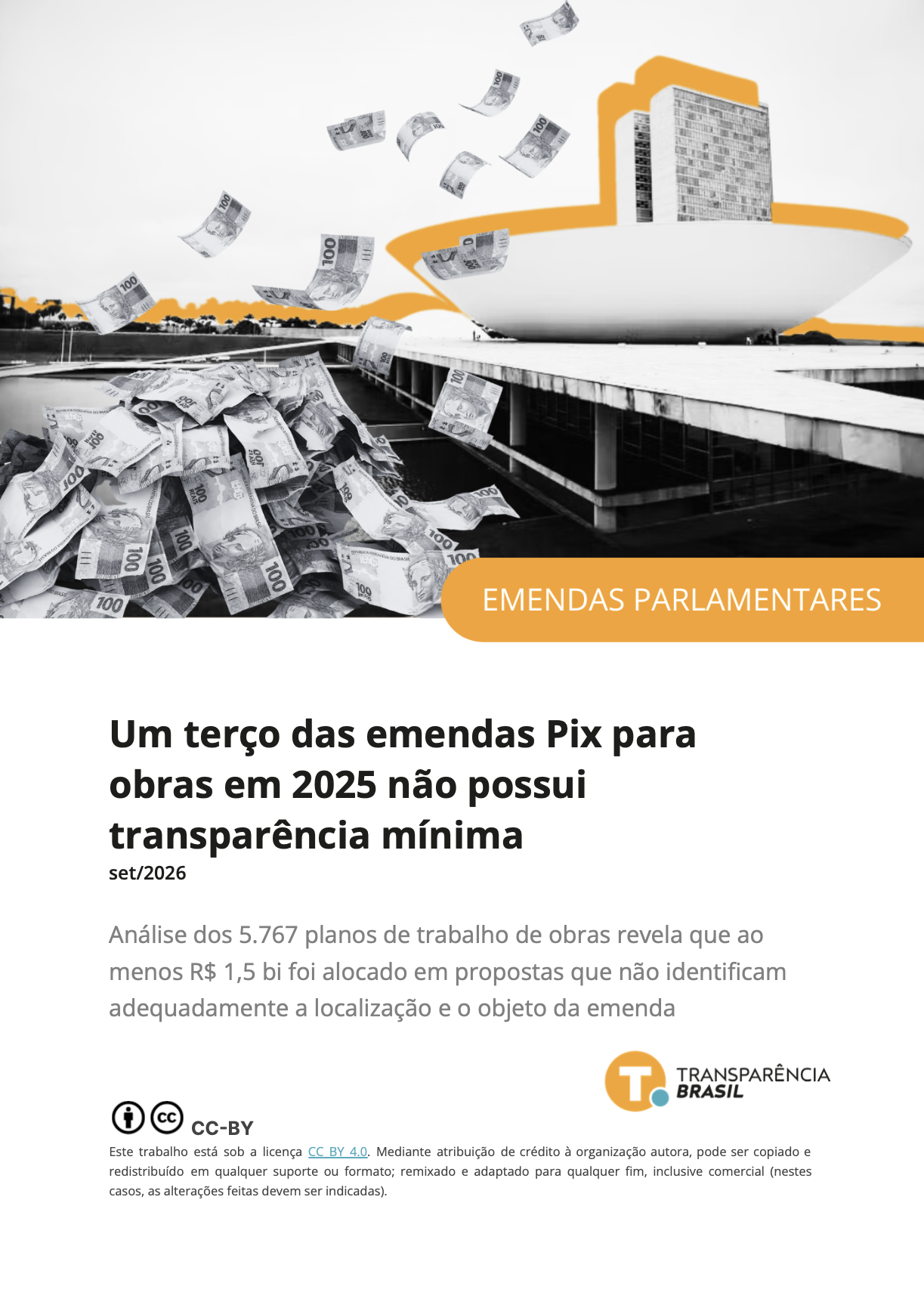
The slice of the federal budget earmarked for parliamentary amendments is growing every year: by 2025, the legislature will have the power to allocate a quarter of the Union’s resources for non-compulsory spending. But there are many gaps in the transparency and traceability of these amendments, preventing civic monitoring of resources that should meet the urgent demands of Brazilian society.
Transparência Brasil’s aim is to ensure that no part of the public budget is operated in secret and becomes a breeding ground for corruption. From the reservation of amendments in the Annual Budget Law to their execution, the federal government, parliamentarians and entities that benefit from amendments must provide detailed information on where, for what and how the resource is used.
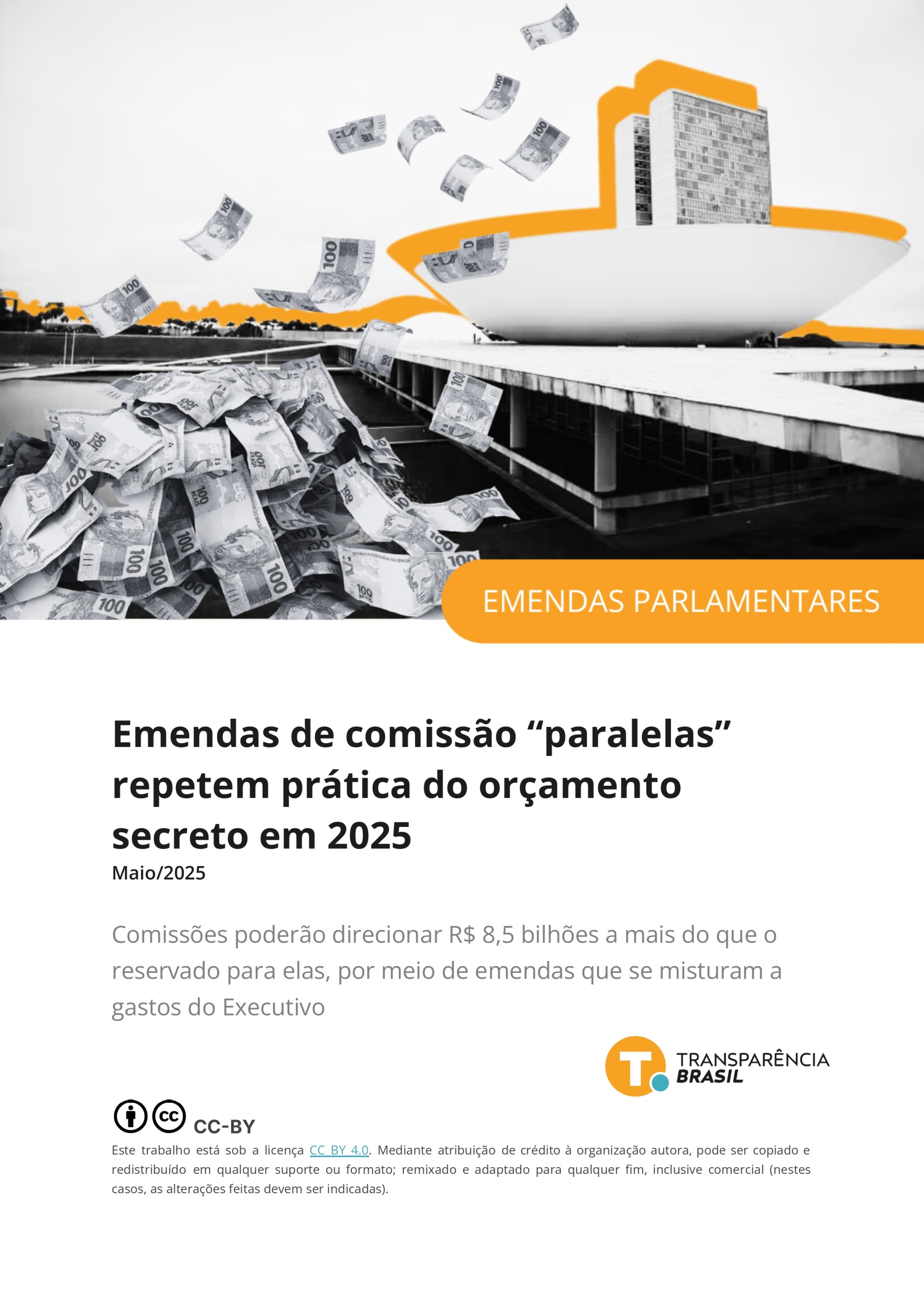
From the secret budget to “parallel” amendments
The broad public debate on parliamentary amendments, as well as the most recent legislation that regulates their formulation, approval and execution, are direct consequences of Transparência Brasil’s work:
1. Action: advocacy on the Supreme Court actions that deal with the secret budget (ADPF 854), individual amendments sent by special transfer (ADIs 7695 and 7688) and the mandatory character of amendments (ADI 7697).
Objective: to provide technical information on the appropriation of the federal budget by the National Congress and on non-compliance with Supreme Court decisions and rules.
2. Action: development of pioneering studies on the formulation and implementation of different types of amendments.
Objective: to demonstrate how the current budget amending process interferes with the planning and maintenance of public policies, favoring diversion of public funds or inefficiency in budget allocation.
3. Action: lobbying the federal executive for improvements in parliamentary amendment tools and data.
Objective: to promote budget transparency and traceability of public funds.
4. Action: bringing together different sectors of society to debate possible ways of improving the parliamentary amendments process.
Objective: to create a favorable environment for reforms in the format and size of amendments.
Funders