jan/2021 - active
Bianca Berti, Cristiano Pavini, Juliana Sakai, Raul Durlo, Jessé Oliveira, Joellen Silva, Daniel Fireman, Nazareno Andrade
Instituto Betty e Jacob Lafer, República.org
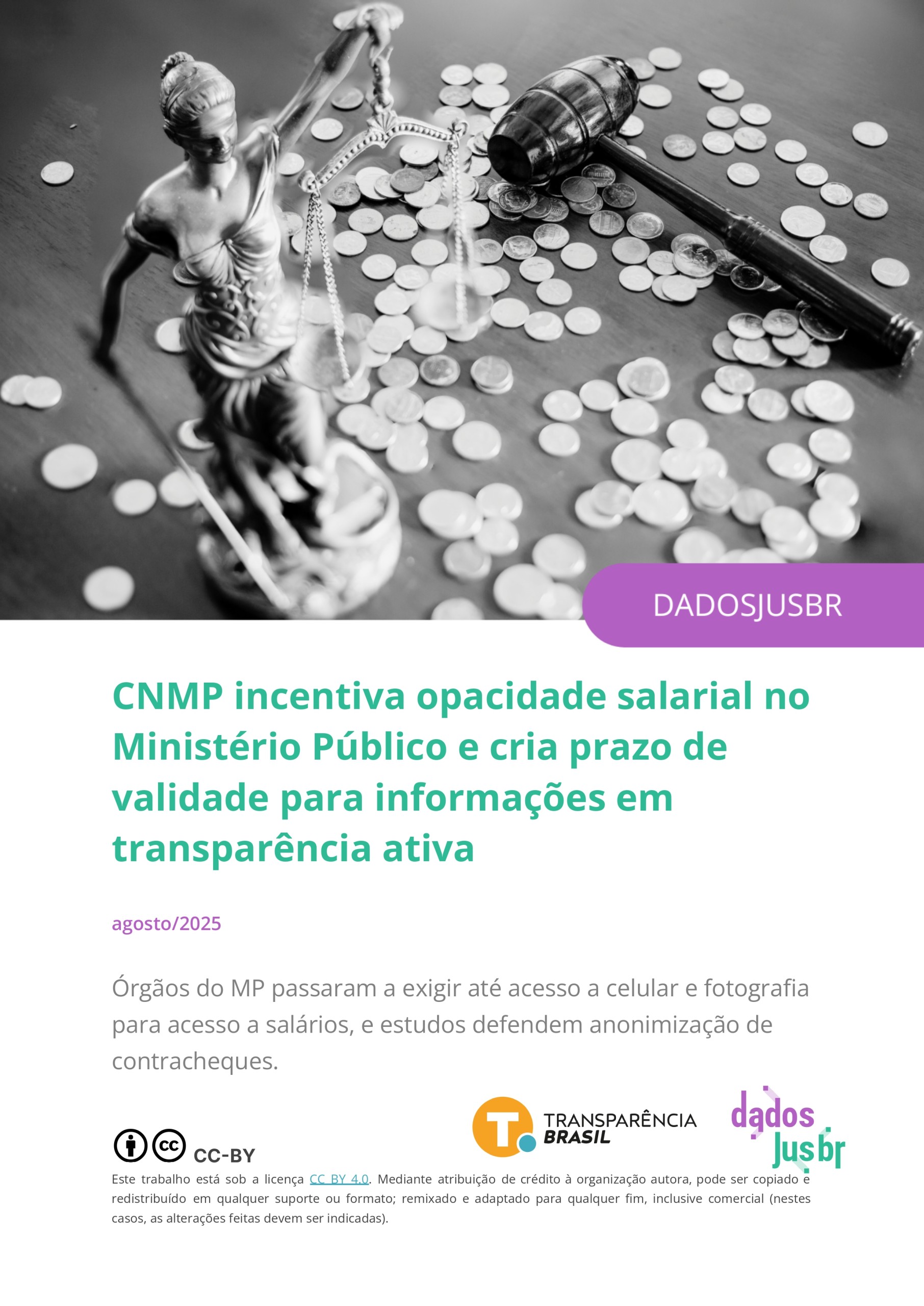
The salaries paid by the Judiciary and the Public Prosecutor’s Office to judges and prosecutors are made up of a base salary and hundreds of benefits, making them the highest paid careers in the public sector. This proliferation of different benefits generates an extensive and complex volume of payroll data. Transparência Brasil’s DadosJusBr project obtains, standardizes and makes available the updated payslips of 123 Justice system bodies on an accessible and centralized platform.
The aim of the project is to ensure that society knows how each judge and prosecutor is paid. What benefits, allowances, bonuses and reimbursements do they receive? What are the amounts of these benefits? How much above the constitutional salary cap did an official receive in a given month? How much did a specific court or public prosecutor’s office spend in a year? All these questions can be answered through DadosJusBr.
Data intelligence for civic action
One of the pioneering features developed by the project is the standardization of the various nomenclatures given by courts and public prosecutor’s offices to the same benefit. For example, if the payslips present five variations of writing for ‘food allowance’, DadosJusBr identifies them and reclassifies them under the same name. This makes it possible to compare expenses between benefits.
The DadosJusBr platform is comprised of:
- Data available from January 2018 for 123 bodies;
- Months of missing data are the responsibility of the bodies themselves, because the salaries are extracted from the official transparency portals;
- Remuneration does not include civil servants in administrative, technical or advisory positions, among others.
DadosJusBr also seeks to promote and foster a culture of transparency of public information in the justice system. For this reason, the more complete and accessible the data, the higher the score in the Transparency Index.
From 2021 to 2024, Transparência Brasil also maintained a cooperation agreement with the National Council of Justice to promote transparency in the judiciary. During the period, surveys and recommendations were presented to the Council regarding the completeness and consistency of the courts’ payroll data, which have ensured a 35% improvement in transparency within a single year.
Related Publications

Funders