In 2017, the Araucária (PR) City Council began building three public daycare centers, the plans for which included retaining walls that would cost R$1.6 million on their own – around 16% of the total cost of the work. One company had won the three tenders, obtaining contracts with the government totaling R$7.8 million.
It turns out that the costly retaining walls were unnecessary and could have been replaced by less expensive solutions, as the Obra Transparenteteam found at the time , a Transparência Brasil project carried out in conjunction with the Observatório Social do Brasil (OSB) from 2017 to 2019. In addition, the company that won the tender had only been established for 8 months and its accounting documents did not show that it was actually working – let alone that it had the technical capacity to build the nurseries.
Faced with this, the City Council claimed that its hands were tied: nothing could be done because the contracts had been signed and the evidence was not sufficient to characterize the contracted company as unfit. But the Federal Court of Auditors (TCU), when analyzing the evidence presented by TB, ordered that the tenders be annulled and new ones carried out, using more cost-effective solutions in relation to the retaining walls. In the new process, their costs fell by 74%: from R$1.6 million to R$417 thousand.
And so, in a single municipality, Obra Transparente had more impact on saving public resources than its own total cost, financed by the United Nations Democracy Fund (UNDEF) to the tune of US$ 220,000. In Guarapuava (PR), São José dos Campos (SP) and Taubaté (SP), three other cities monitored by the initiative, there were works in progress that were all completed after the project’s work.
Since 2016, TB has monitored works like these, financed by the federal government’s ProInfância program, through Obra Transparente and the Tá de Pé Obrasproject . The organization’s aim was to increase the transparency and accountability of the federal and municipal governments in the execution of educational infrastructure projects, given that 46% of the almost 9,000 works financed in the ten years of the program had been paralyzed or delayed.
While Tá de Pé relied on the population to monitor construction and renovation, Obra Transparente strengthened local observatories so that they could monitor public works in the regions where they were active. The organizations monitored the constructions, looking for signs of delay or abandonment, which, if confirmed, were taken to the government for action. They also demanded that city halls complete unfinished construction without further delays or stoppages.
A total of 135 school construction projects were selected to have their contracting and execution processes monitored, in 21 municipalities in the South and Southeast with active observatories linked to the OSB network system. In most cases, the municipal bodies were open to the contributions of local organizations and used them to demand that the contracted companies make corrections to the work in progress.
TB’s initiative worked in three main stages: mapping data on the works, training partners and monitoring in the field. According to Bianca Vaz Mondo, the project’s manager, the presence of the organizations on the monitored sites proved important in the first stage.
The observatories needed to collect up-to-date data on the progress of the works directly from the municipalities, since the federal government’s SIMEC platform had gaps and was out of date. The existence of a prior dialogue between the organizations and the local government and the practice of obtaining information were facilitators in this process.
“Monitoring a public policy starts from the premise that there is a minimum amount of reliable data, and we have seen that this is not guaranteed. In this case, we were able to find other ways to get to the necessary information. But deficiencies do exist and are a major obstacle to the work of social control,” says Mondo.
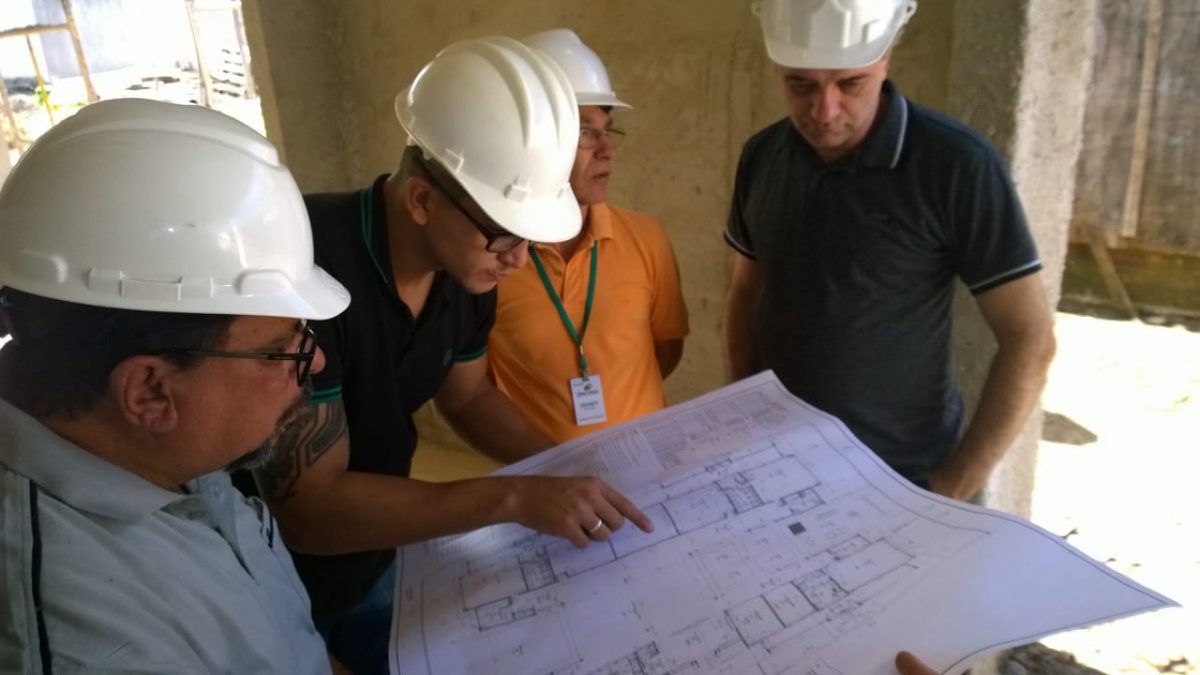
The training sessions were also offered to observatories that were not Obra partners after the project was completed, which expanded the reach and impact of TB’s methodology on the quality of school construction projects delivered across the country. The eight editions of training reached a total of around 270 participants.
For Ney Ribas, current vice-president of the OSB and, at the time of the project, president of the institution and responsible for coordinating the 21 observatories, the ‘beginning, middle and end’ methodology for monitoring public works was fundamental for qualifying the work that was already being carried out by local organizations. He says that, with Obra Transparente, the network of organizations began to operate in the area with greater security.
The project manager agrees: the success of the initiative, for Bianca Mondo, lies in the combination of the structured mobilization of already engaged citizens, with experience in monitoring public resources, and the technical training to direct them in the area of public works. She points out that, as a result, the level of depth of questioning and contributions from observatory volunteers was greater than in other experiences in which she has worked.
At the field stage, local organizations had occasional support from a Technical Chamber, created for situations that required specialized knowledge, such as engineering. The short deadline for analyzing tenders and the costly model were limitations to this support work, but the Chamber’s team was fundamental in cases such as Araucária, where it intervened with technical questions that led to changes.
Despite the positive impact on the city in Paraná, Araucária’s City Hall is among those that have been resistant to Obra Transparente’s technical observations on school construction, says Ney Ribas. “Few municipalities were prepared. And when I say prepared, it means that the manager was aware of the role of external and social control,” he says.
In other municipalities, Paranaguá (PR) and Uberlândia (MG), for example, there was openness to dialog. In both cases, meetings were held with municipal managers to understand and resolve the obstacles to ongoing school construction that was not progressing.
In Taubaté (SP) and Foz do Iguaçu (PR), the government’s openness to the problems detected by the observatories resulted in the contracted companies being asked to correct the projects. In the city of São Paulo, the Obra Transparente team ended up replacing the municipal inspectors, making up for the shortcomings of the municipal inspection and contributing to the completion of four works that were behind schedule.
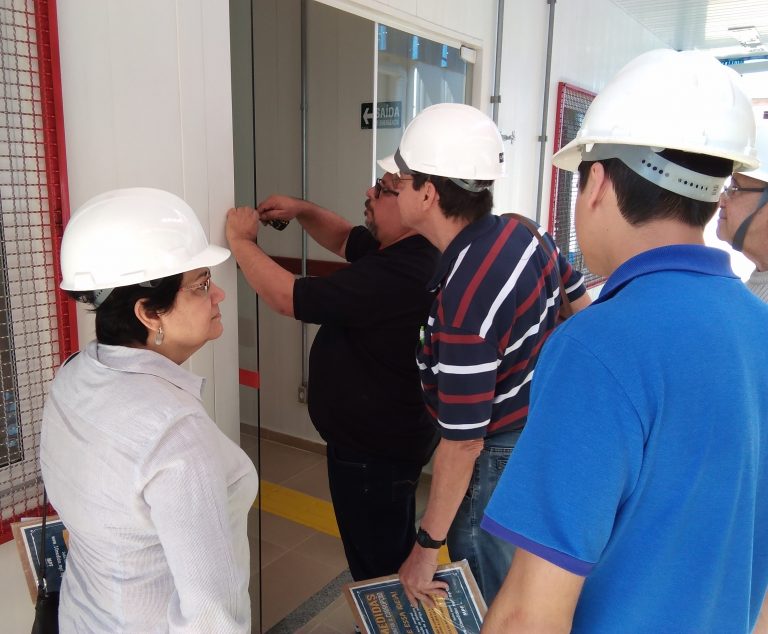
Transparência Brasil also observed systematic flaws and possible improvements in the financing of school works by ProInfância, contributions sent to the federal government. At the end of the project, of the 135 projects monitored, 55 (40.7%) had been canceled. In a debate that brought together representatives of the public authorities, control bodies and civil society to discuss the structural failings of the FNDE, the consensus was for urgent changes.
The overall balance of the project, for Bianca Mondo, is one of direct practical effect, with the correction of problems and completion of part of the works, and institutional effect, by strengthening and technically qualifying the observatories. “We made it possible to improve the quality of the execution [of the works] by pointing out: ‘there are these problems and this has to be corrected’. It was a job to support the monitoring that the government itself has to do as a contracting body,” he says.
In addition, Obra has contributed to social control by investing in a culture that makes citizens protagonists in their municipality, according to Ney Ribas. This culture ranges from training methodologies to encouraging the population to take an interest in the impact of public authorities’ actions.
The vice-president of the OSB believes that it is necessary to invest in this beyond the work within the observatories. One way local organizations have found to engage the population, for example, is to present the results achieved by Obra Transparente at events in their municipalities. But according to Ribas, there is still a need for a culture of transparency on the part of public bodies, so that they make information available in a complete and accessible way.
The manager of Obra Transparente also recalls that the project, together with Tá de Pé Obras, marked the resumption of Transparência Brasil’s work on social control over public contracts. Since then, the organization has worked on school lunch contracts, emergency purchases to deal with the Covid-19 pandemic and, currently, with drug contracts through Medicamentos Transparentes.
This set of projects gives visibility to an area that is still very opaque, complex and at high risk of fraud and corruption because it involves large volumes of public funds. After 25 years of work, TB continues to monitor what, in Mondo’s words, ‘drives everything the public administration does’.